
|
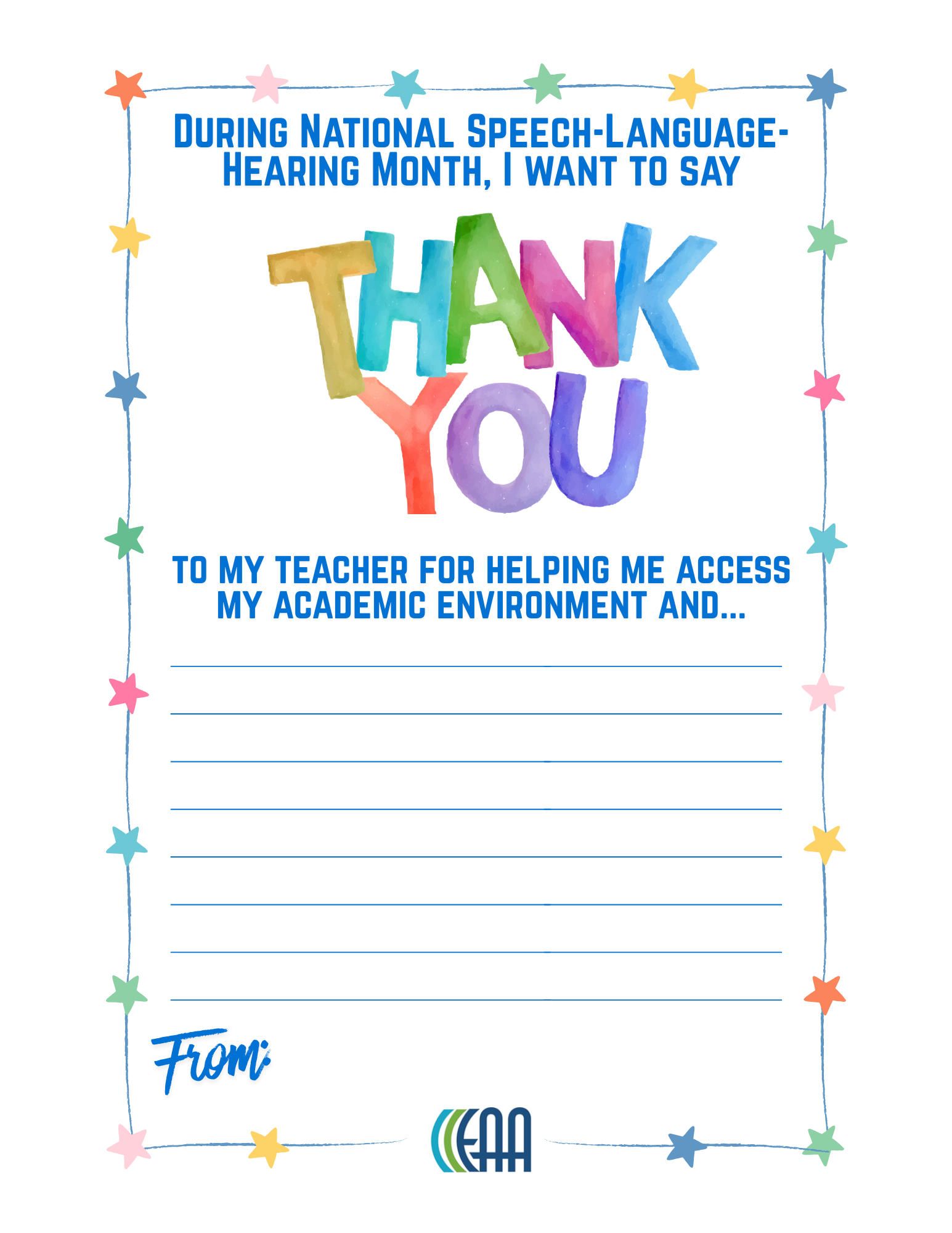
Home / National Speech-Language-Hearing Month National Speech-Language-Hearing MonthWhat Is NSLHM?Each May, National Speech-Language-Hearing Month (NSLHM, formerly Better Hearing and Speech Month, or BHSM) provides an opportunity to educate the public about communication disorders and celebrate the professionals who help people communicate. The observance was renamed from BHSM to NSLHM in 2023 to better reflect the full scope of the professions and people it represents. Educational audiologists play a critical role in ensuring that children with hearing loss and auditory processing challenges can access the curriculum and participate fully in school. NSLHM is a perfect time to raise awareness of what educational audiologists do, and why every school district needs one. Why It Matters for Educational AudiologyMore than 5.1 million children and teens ages 6–19 in the United States have some degree of hearing loss (ASHA). Early identification and intervention in the school setting make a measurable difference in academic outcomes. Educational audiologists are uniquely positioned to bridge clinical hearing care and classroom access, from hearing screening programs and hearing assistive technology management to 504/IEP team participation and teacher in-service training. How to Get Involved in NSLHMSpread the WordUse #NSLHM, #EdAudAdvocacy, #edauds, and #eaa on social media. Share posts from EAA to amplify the message. Tag @EduAud so the community can see your efforts! Educate Your SchoolsShare EAA's infographics and resource library materials with teachers, administrators, and parents during May. Use resources from Noisy Planet and Dangerous Decibels to teach students about safe listening. Offer a brief in-service on hearing loss in the classroom or how hearing assistive technology supports learning. Classroom ActivitiesUse EAA's printable activities to teach students about hearing, listening, and the technology that helps their peers learn. The American Academy of Audiology (AAA) also offers resources just for kids and young adults. Hearing Technology Scavenger Hunt PDF Students explore their school to find various types of amplification, remote microphones, HAT systems, and more. Thank You Door Posters, Printable posters for students and staff to write thank-you messages. Available for: Educational Audiologist | School Nurse | SLP | Teacher of the DHH | Teacher
My Hearing Technology Worksheet PDF Students identify their devices, draw and label them, and write about what helps them hear best in class. Who Helps Me Hear at School? PDF A matching activity where students connect school professionals to what they do to support hearing. Celebrate and ConnectJoin the EAA Community to connect with fellow educational audiologists, share NSLHM activities, and swap ideas for school-based awareness events. Recognize colleagues, SLPs, and teachers who support students with hearing and communication needs. Connect families with organizations like Hands & Voices and the National Deaf Center. Also in May Teacher Appreciation WeekMay 4–8 | National Teacher Day: May 5 Teachers of the deaf and hard of hearing, general education teachers, and itinerant staff are essential partners in supporting students with hearing loss. Teacher Appreciation Week is the perfect time for educational audiologists to recognize the educators who go the extra mile, checking hearing aids each morning, wearing a remote microphone, adjusting seating, previewing vocabulary, and advocating for their students every day. #ThankATeacher #NSLHM #EdAudAdvocacy Ways Educational Audiologists Can Thank the Teachers They Work WithDrop Off a TreatBring coffee, a small gift card, or a snack basket to the teachers you collaborate with. Attach a note like, "Thanks for being a great partner in helping our students hear and learn!" Send an Email to Their PrincipalLet school administrators know how a particular teacher has gone above and beyond for students with hearing loss. Public recognition from another professional carries real weight. Share a ResourceGive teachers something useful, an EAA infographic about classroom acoustics, a quick-reference card for hearing technology troubleshooting, or a link to a helpful webinar. More May ObservancesMay is packed with opportunities to recognize the school-based professionals educational audiologists work alongside every day.
Social Media ToolkitCopy, customize, and share these sample posts throughout May. May is National Speech-Language-Hearing Month! Did you know educational audiologists ensure that students with hearing loss have equal access to learning? Learn more at edaud.org. #NSLHM #EdAudAdvocacy More than 5 million children and teens ages 6–19 have some degree of hearing loss (ASHA). Early identification by school-based audiologists makes all the difference. Learn how at edaud.org. #NSLHM #EdAudAdvocacy Every child deserves to hear their teacher clearly. Educational audiologists manage hearing assistive technology, conduct screenings, and collaborate with IEP teams to make that happen. #NSLHM #EdAudAdvocacy Happy Teacher Appreciation Week! A special thank you to the teachers who wear remote microphones, check hearing aids, and go the extra mile every day for students who are deaf and hard of hearing. You are essential partners in access. #ThankATeacher #NSLHM #EdAudAdvocacy Thank you to the educational audiologists, SLPs, and teachers who support students with hearing and communication needs every day. You're making a real difference! #NSLHM #EdAudAdvocacy For Parents & FamiliesEducational audiologists are school-based hearing specialists who help your child access learning. These resources can help you learn more about what they do and how to be an active partner in your child's hearing care at school.
ResourcesFrom EAA
From ASHA
From AAA (American Academy of Audiology)
Frequently Asked QuestionsWhen is National Speech-Language-Hearing Month?National Speech-Language-Hearing Month (NSLHM) is observed every May in the United States to raise awareness about communication disorders and the professionals who support people with hearing, speech, and language needs. What's the difference between National Speech-Language-Hearing Month and Better Hearing & Speech Month?They are the same observance. Better Hearing & Speech Month (BHSM) was renamed National Speech-Language-Hearing Month (NSLHM) in 2023 to better reflect the full scope of the professions involved, including audiologists, speech-language pathologists, and the people they serve. You may still see the older BHSM name used in some materials. How can schools celebrate National Speech-Language-Hearing Month?Schools can celebrate NSLHM by running classroom activities about hearing and listening, posting printable thank-you door signs for educational audiologists and other related service providers, completing a hearing technology scavenger hunt, sending information home to families, and recognizing the staff who support students with hearing and communication needs. See the classroom activities above for free printable resources. What does an educational audiologist do during NSLHM?During NSLHM, educational audiologists raise awareness of their role, educate teachers and administrators about hearing access in the classroom, distribute classroom activities and infographics, recognize teachers and speech-language pathologists who support students with hearing loss, and connect families with resources. Learn more about the educational audiologist scope of practice. What are the official hashtags for NSLHM?The primary hashtag is #NSLHM. Educational audiologists also use #EdAudAdvocacy, #edauds, and #eaa to connect with the broader community. How is NSLHM different from World Hearing Day?World Hearing Day is observed globally on March 3 each year and is led by the World Health Organization. National Speech-Language-Hearing Month is a U.S. observance held every May and is widely promoted by professional associations including ASHA. Both raise awareness about hearing health, but NSLHM also covers speech and language professions. #NSLHM • #EdAudAdvocacy • #edauds • #eaa Keep ExploringOctober
EdAuD Awareness WeekA week each October celebrating educational audiology, with shareable campaign materials. March 3
World Hearing DayThe WHO’s global hearing health observance, with the ASHA-EAA classroom toolkit. Shareables
InfographicsVisual explainers to share with educators and families during awareness months. |