

|
Home / Practice Standards & Resources / Infographics / Educational Audiology Services in Schools Educational Audiology Services in SchoolsEAA Infographic · Brochure · 2026 A one page overview of what educational audiologists do in school settings, for sharing with administrators, IEP teams, general education teachers, special education staff, and families. A companion tri-fold brochure covers this material in a printable handout. The full text of the infographic, plus resources you can follow up on, are on this page. Download and shareTwo formats, both free to print, post, and pass along to staff and families. One page infographic The full visual, for slide decks, staff bulletin boards, newsletters, and email. Tri-fold brochure A printable handout covering the same topics, for conference tables, front office racks, and IEP meetings. 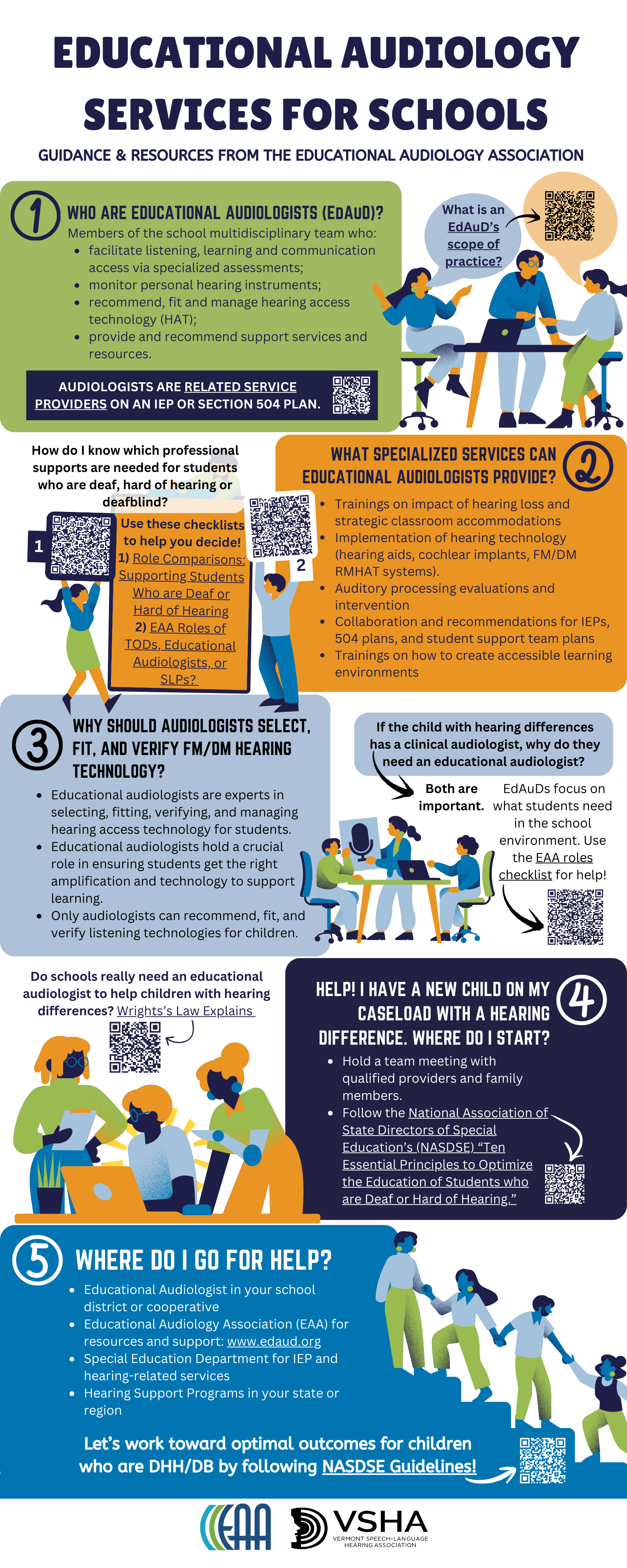
Select the image to open it at full size. The complete text follows. What this infographic saysGuidance & resources from the Educational Audiology Association The wording below is taken from the infographic itself, unchanged. 1 Who are educational audiologists (EdAuD)?Members of the school multidisciplinary team who:
Audiologists are related service providers on an IEP or section 504 Plan. 2 What specialized services can educational audiologists provide?
How do I know which professional supports are needed for students who are deaf, hard of hearing or deafblind? Use these checklists to help you decide! 3 Why should audiologists select, fit, and verify FM/DM hearing technology?
If the child with hearing differences has a clinical audiologist, why do they need an educational audiologist? Both are important. EdAuDs focus on what students need in the school environment. Use the EAA roles checklist for help! 4 Help! I have a new child on my caseload with a hearing difference. Where do I start?
Do schools really need an educational audiologist to help children with hearing differences? 5 Where do I go for help?
The companion brochureThe same material in a tri-fold handout you can print, fold, and give to someone. What’s inside
The brochure also carries QR codes to this page, to the Wrightslaw explanation of educational audiology as a related service, and to the NASDSE guidelines. Useful at conference exhibit tables, in front office and clinic racks, in new staff onboarding packets, and as a leave-behind after an IEP or 504 meeting. Printing itPrint on letter size paper, then fold in thirds. Any office copier will do, and no special stock or color calibration is needed. The brochure is free to reproduce in any quantity, for any school, district, clinic, or family organization. 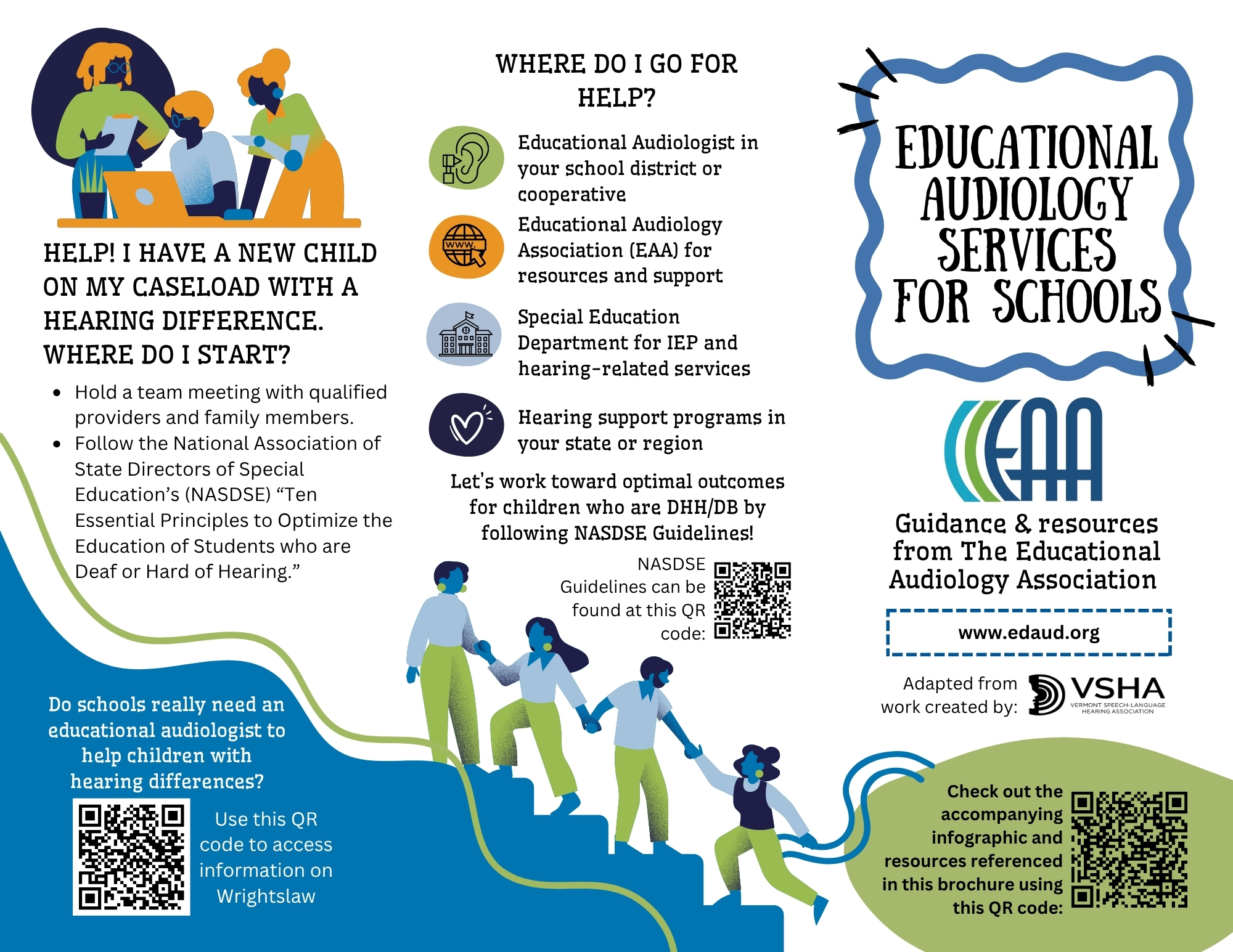
Page 1. Select the image to open it at full size. 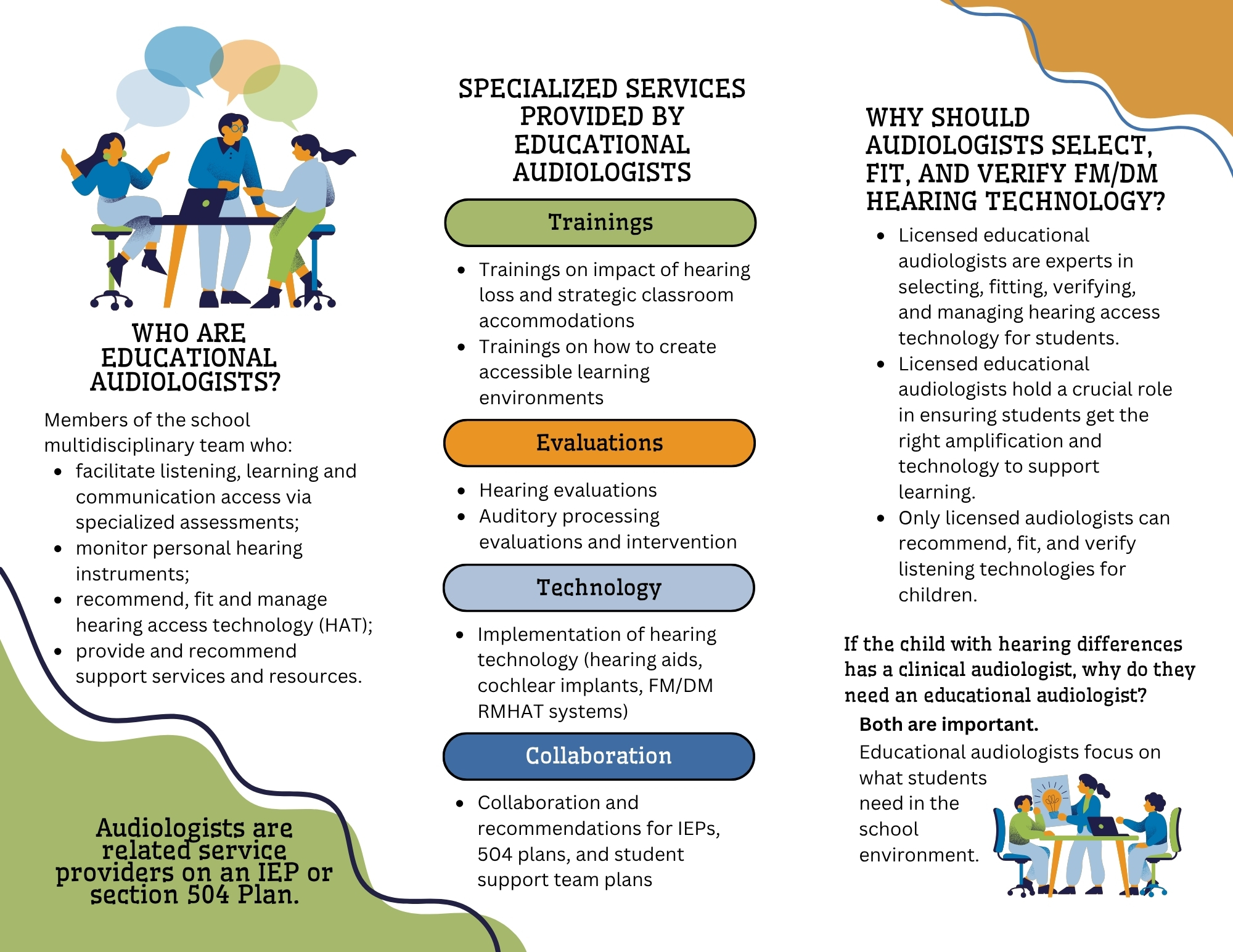
Page 2. Select the image to open it at full size. What the brochure saysThe full text of the brochure, panel by panel, for anyone who cannot use the PDF. Its cover reads Educational Audiology Services for Schools — Guidance & resources from The Educational Audiology Association. Who are educational audiologists?Members of the school multidisciplinary team who:
Audiologists are related service providers on an IEP or section 504 Plan. Specialized services provided by educational audiologistsTrainings
Evaluations
Technology
Collaboration
Why should audiologists select, fit, and verify FM/DM hearing technology?
If the child with hearing differences has a clinical audiologist, why do they need an educational audiologist? Both are important. Educational audiologists focus on what students need in the school environment. Help! I have a new child on my caseload with a hearing difference. Where do I start?
Do schools really need an educational audiologist to help children with hearing differences? The brochure answers this with a QR code to the Wrightslaw explanation of why children with hearing loss need an educational audiologist on their team. Where do I go for help?
Where the brochure’s QR codes lead
The brochure also carries the EAA website address and the credit line “Adapted from work created by: Vermont Speech-Language Hearing Association (VSHA).” Resources and referencesEverything referenced on the infographic and in the brochure, plus the organizations families most often need next. All links were checked in August 2026. If a link stops working, please let us know. For familiesIndependent organizations that support families of children who are deaf or hard of hearing.
Your child's rights at schoolWhat the law says about audiology services, and how to advocate for them.
Guidance, standards, and role comparison toolsThe documents referenced throughout this infographic.
Suggested citationEducational Audiology Association. (2026). Educational audiology services in schools [Infographic]. https://www.edaud.org/infographic--educational-audiology-services-in-schools Educational Audiology Association. (2026). Educational audiology services in schools [Brochure]. https://www.edaud.org/assets/docs/Infographics/eaa-brochure-edaud-services-for-schools-2026.pdf Keep ExploringFor Families
Student & Family SupportGuidance and resources for supporting students and their families directly. Go Deeper
Resource LibraryForms, guides, and external resources for day to day school audiology practice. |